
The Right Insulation Density Today Can Protect a Home’s Comfort, Efficiency, and Durability for Decades
Insulation doesn’t fail overnight. In many homes, performance slowly drops because insulation settles, shifts, or compresses over time. That’s why proper density calibration matters so much during insulation installation in Tualatin OR projects. When insulation is installed at the wrong density, homeowners often notice rising utility bills, uneven temperatures, and worsening indoor comfort years later.
Professional density calibration helps insulation maintain thermal resistance, reduce heat loss, and improve long-term energy efficiency. By carefully measuring material depth, airflow resistance, and application pressure, insulation installers can prevent settling problems that lead to performance loss and higher energy costs.
Density calibration in insulation installation involves measuring and adjusting insulation thickness, coverage, and compression levels to prevent settling over time. Proper calibration improves thermal resistance, reduces heat loss, supports energy efficiency, and helps insulation maintain long-term performance without gaps, sagging, or air leakage.
Why Insulation Density Affects Long-Term Home Performance
Many homeowners assume insulation works like a permanent blanket. In reality, insulation materials react differently depending on how they’re installed. If blown-in insulation is too loose, it can settle unevenly. If Fiberglass batt insulation is compressed too tightly, its thermal resistance decreases.
That’s especially important in Tualatin, OR and throughout the Willamette Valley, where seasonal moisture and temperature swings affect home performance year-round.
Northwest Weatherization often discovers older homes with insulation gaps hidden beneath surface layers. These voids create pathways for heat loss, increasing energy consumption and straining HVAC systems.
People Also Ask: Why does insulation settle over time?
Insulation settles when density levels are too low, moisture issues develop, or materials aren’t evenly distributed during installation services. Poor airflow control and improper attic insulation techniques can also contribute to shifting.
Modern insulation assessment methods focus heavily on maintaining consistent density across all building cavities. Without that consistency, even premium insulation products may underperform.
Why Stable Insulation Density Lowers Energy Bills and Improves Comfort
When insulation stays stable year after year, the entire home benefits.
Consistent insulation density helps maintain even temperatures throughout living spaces. Heating and cooling systems operate more efficiently, energy bills stay lower, and indoor air quality improves because drafts and moisture infiltration decrease.
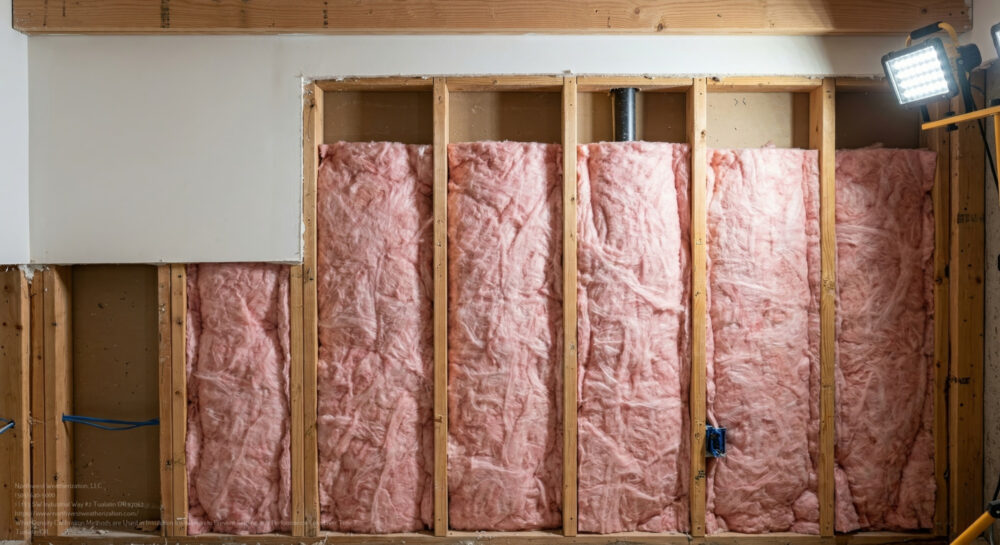
According to the U.S. Department of Energy, air leaks and inadequate insulation are among the largest causes of residential energy waste in American homes. Proper installation methods significantly improve home performance and energy efficiency.
Homeowners often notice several improvements after professional upgrades:
- Lower utility bills
- Reduced heat loss
- Better soundproofing insulation performance
- Fewer temperature fluctuations
- Improved home comfort
Northwest Weatherization helps homeowners throughout the State of Oregon improve efficiency through carefully calibrated attic insulation, crawl space solutions, and duct sealing strategies.
Want Better Insulation Installation for Your Home?
Contact Northwest Weatherization today for trusted energy-saving solutions.
5 Installation Mistakes that Often Lead to Insulation Settling
Some insulation failures start during the very first installation day. Small calibration mistakes can quietly reduce efficiency for years.
Uneven Blown-in Insulation Coverage
Blown-in insulation must reach a consistent depth throughout attic spaces. Thin spots eventually become major heat loss zones.
Poor Moisture Management
Moisture issues weaken insulation materials and accelerate settling. Without a vapor barrier, insulation can absorb humidity and lose effectiveness.
Incorrect Spray Foam Expansion
Open and closed-cell spray foam insulation requires careful pressure and temperature control. Poor application may result in shrinkage or voids.
Ignoring Air Leak Sealing
Air movement through insulation cavities disrupts thermal performance and increases energy costs.
Leaving Damaged Insulation Behind
Old insulation affected by Water damage or Fire damage should be removed before the new installation begins.
Northwest Weatherization addresses these concerns through detailed inspection and assessment procedures before installation starts. That process helps ensure long-term home performance rather than short-term cosmetic improvements.
How Insulation Installation Uses Density Calibration to Improve Efficiency
Professional insulation installation in Tualatin OR, relies on much more than simply adding material to walls or attics. Contractors carefully calculate density targets based on insulation type, square foot coverage, and airflow exposure.
For example, Cellulose Insulation requires specific packed density levels to prevent future settling inside wall cavities. If it’s too loose, gravity eventually pulls the material downward, creating uninsulated gaps near upper wall sections.
Fiberglass insulation behaves differently. Fiberglass batt insulation must fully contact framing cavities without excessive compression. Meanwhile, blown-in fiberglass requires balanced application rates to maintain thermal resistance.
Northwest Weatherization uses quality control checks during installation services to verify even coverage and long-term stability. Those checks are especially valuable in retrofit insulation projects where older homes already contain inconsistent insulation layers.
In homes near the Tualatin River and across the Portland metro area, moisture management, insulation and vapor barrier protection also play major roles in preserving insulation density over time.
The Calibration Methods Professionals Rely on for Long-Term Insulation Performance
Modern Insulation Installers use several techniques to maintain stable insulation density.
Depth Markers and Coverage Mapping
Installers use depth gauges and coverage maps to ensure blown-in insulation reaches the target thickness consistently.
Material Weight Calculations
Professionals compare installed insulation weight against manufacturer specifications to verify proper density levels.
Controlled Airflow Testing
Air movement patterns are checked during installation to prevent future settling caused by airflow disruption.
Moisture Monitoring
Moisture-management insulation strategies help prevent humidity-related insulation failures.
Thermal Imaging Verification
Infrared technology helps identify hidden low-density areas after installation.
Northwest Weatherization combines these methods with weatherization audit procedures to improve whole-home efficiency across Tualatin OR and nearby communities.
What Experienced Contractors Learn After Years of Retrofit Insulation Work
Experienced contractors understand something many homeowners don’t: insulation performance is about consistency, not just thickness.
Northwest Weatherization recently completed a retrofit insulation project where homeowners complained about rising energy costs despite previous attic upgrades. During the Initial consultation, technicians discovered uneven blown-in insulation coverage and poorly sealed attic penetrations.
After recalibrating insulation density, adding air-leak sealing, and improving vapor barrier protection, the home’s comfort improved dramatically. Indoor temperatures stabilized, HVAC strain decreased, and the homeowners reported noticeable energy savings within the first season.
This kind of result is common in older homes throughout the Portland metro area. Many structures built decades ago weren’t designed around modern home performance standards.
That’s why proper insulation assessment matters so much before installation begins.
Why Proper Density Calibration Supports Whole-home Energy Efficiency
A properly insulated home functions as a connected system. Walls, attics, crawl spaces, and duct systems all influence one another.
When insulation density remains stable, several long-term benefits become possible:
- Better thermal resistance
- Reduced energy consumption
- Improved indoor air quality
- Lower operating strain on HVAC systems
- More predictable energy costs
Programs like Energy Trust of Oregon also encourage homeowners to pursue professionally installed upgrades because calibrated insulation systems improve long-term efficiency outcomes.
Many homeowners in the region may qualify for energy assessments, assistance with rebate paperwork, and weatherization incentives through utility providers such as Forrest Grove Light and Power.
High-quality insulation installation isn’t only about comfort today. It’s about preserving performance for years to come.
Why Northwest Weatherization is the Right Choice for Lasting Insulation Performance
We at Northwest Weatherization provide the best solutions to our customers by focusing on long-term insulation performance, accurate density calibration, and complete home efficiency strategies. Our team carefully evaluates airflow, moisture management, insulation materials, and thermal resistance to deliver dependable results that last.
We proudly provide attic insulation, crawl space cleaning, blown-in insulation, vapor barrier installation, retrofit insulation, and weatherization services designed for homes throughout Tualatin, OR and the surrounding Portland metro area. Our commitment to customer service, quality control, and energy efficiency helps homeowners protect their comfort while lowering utility bills.
Contact Northwest Weatherization today for professional insulation solutions that improve durability, comfort, and energy savings. Experience the long-term value of expert insulation installation in Tualatin OR.
Want Better Insulation Installation for Your Home?
Contact Northwest Weatherization today for trusted energy-saving solutions.