
Understanding Vapor Barrier Lifespan and When Portland Homeowners Should Consider Replacement
A crawl space vapor barrier can look perfectly functional from a distance while gradually losing its ability to control ground moisture. For homeowners considering vapor barrier installation in Portland, OR, understanding material durability and replacement timing is essential. Most conventional polyethylene vapor barriers last approximately 5–15 years, while heavier, professionally installed membranes may remain effective for 20 years or longer under favorable conditions. Actual lifespan depends on material thickness, installation quality, moisture exposure, and crawl space activity. Northwest Weatherization helps Portland homeowners evaluate aging barriers, identify moisture concerns, and determine when replacement is appropriate.
Portland’s rainy climate makes these considerations particularly important. Properties near Forest Park Conservancy and Pittock Mansion can experience prolonged dampness beneath shaded foundations, while older homes in Sellwood-Moreland and the Alberta Arts District may have deteriorating plastic sheeting or incomplete ground coverage. Even homes without visible standing water can experience moisture migration through exposed soil. Recognizing when a barrier needs attention helps protect insulation, subfloor framing, and overall indoor comfort.
How Long Should a Crawl Space Vapor Barrier Last?
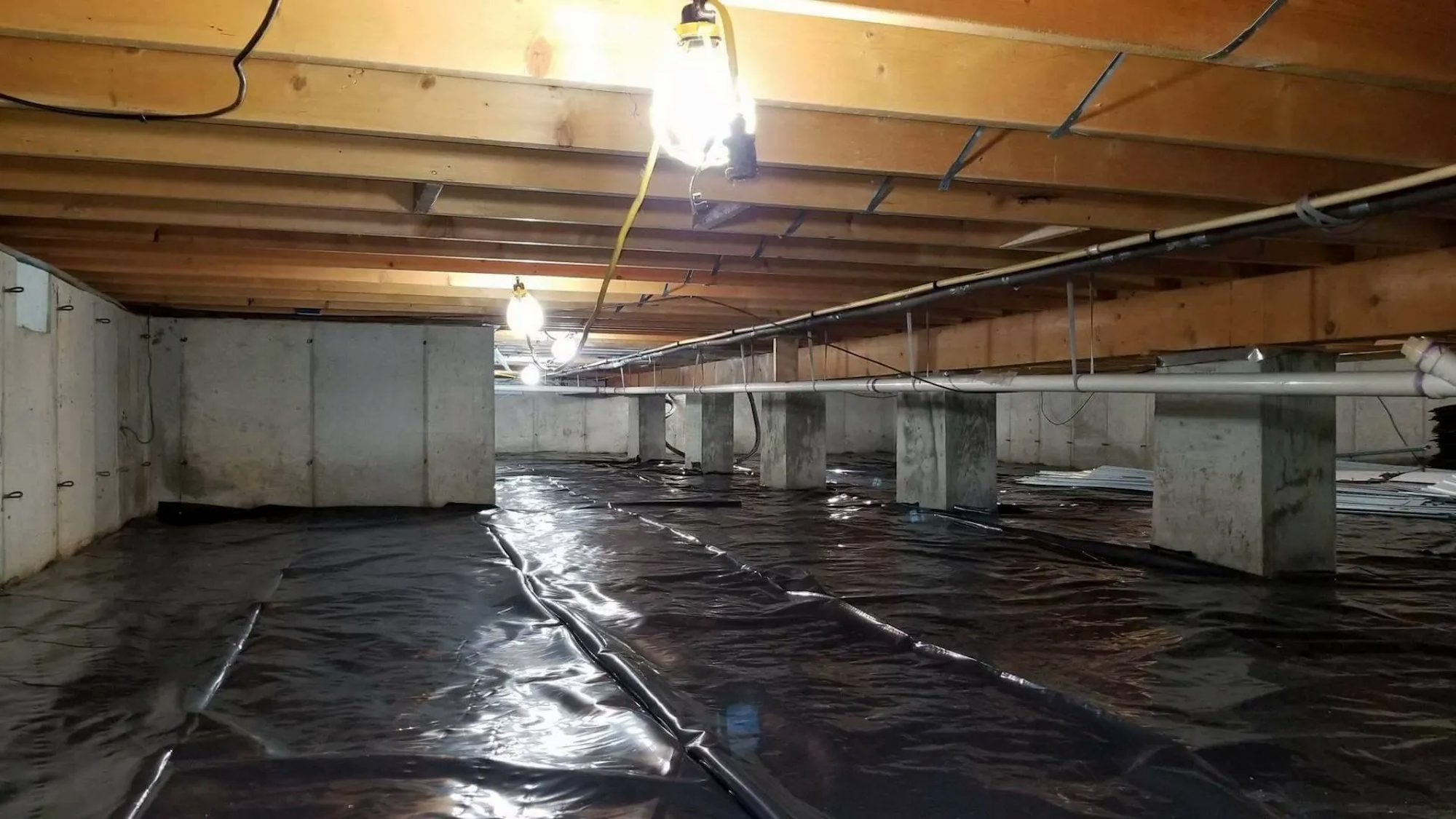
A vapor barrier is a moisture-control material, typically made from black polyethylene sheeting, installed over exposed crawl space soil. Its primary purpose is to reduce water vapor movement from the ground into the space beneath a home. This protection matters because persistent humidity can affect surrounding building materials even when significant water intrusion is not visible.
A basic polyethylene liner may provide several years of dependable coverage, but thinner materials are generally more vulnerable to punctures, displacement, and wear. Heavier membranes offer greater resistance to damage, particularly when installed around foundation supports, utilities, and frequently accessed areas. However, greater thickness does not guarantee a specific replacement date.
The lifespan of vapor barrier installation in Portland, OR, also depends on whether the original installation included sufficient overlaps, appropriately secured seams, and careful fitting around obstacles. A barrier that remains intact and properly positioned can continue performing effectively beyond its estimated service life. Conversely, a relatively new installation may require repairs or replacement when significant damage compromises coverage.
Standard Vapor Barriers Versus Crawl Space Encapsulation
Standard vapor barrier installation primarily covers exposed soil with black polyethylene sheeting. This approach can be appropriate for crawl spaces where drainage is controlled and foundation conditions are reasonably stable. The material must remain positioned across the ground to limit moisture movement effectively.
Crawl space encapsulation involves more extensive coverage, potentially using a heavier membrane extending across the ground and up portions of the foundation walls. Sealed seams and penetrations help create a more controlled environment. Although these systems may offer additional durability, their performance still depends on proper installation and the surrounding moisture conditions. Neither approach eliminates the need to inspect the crawl space periodically.
Ready to Protect Your Crawl Space With Professional Vapor Barrier Installation?
Contact Northwest Weatherization today for trusted moisture-control solutions and friendly, expert service.
What Causes a Crawl Space Vapor Barrier to Wear Out?
Persistent Ground Moisture and Portland’s Climate
The Pacific Northwest experiences extended periods of rainfall that can contribute to damp crawl space conditions. Moist soil continuously releases water vapor, while inadequate drainage or existing leaks may introduce additional moisture beneath the home. These conditions can expose weaknesses in an aging barrier and make damaged sections more consequential.
Properties near Mississippi Avenue or the Pearl District may have crawl space layouts that differ substantially from detached homes in Sellwood-Moreland. Foundation construction, soil exposure, and access restrictions influence where moisture collects and how easily the barrier can be inspected. Northwest Weatherization evaluates these conditions rather than assuming every Portland property requires the same replacement approach.
Material Thickness and Installation Quality
Material selection plays an important role in long-term durability. Thin poly sheeting can tear when stretched across uneven ground or disturbed during work beneath the home. More durable polyethylene membranes generally tolerate handling and contact with crawl space surfaces better, although sharp obstacles can damage any material.
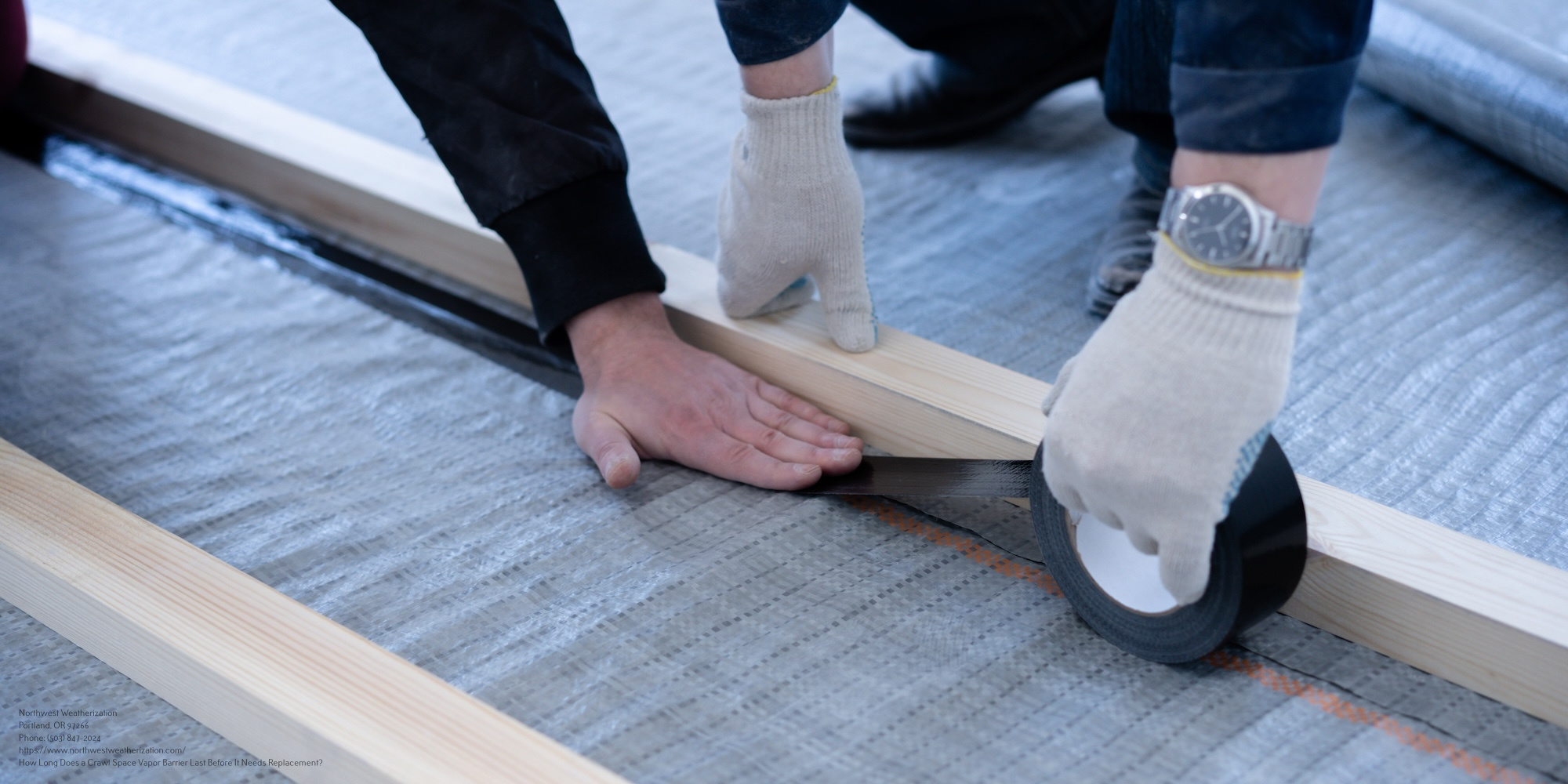
Installation quality is equally important. Poorly positioned sections, unsecured overlaps, and openings around foundation supports can leave soil exposed. Over time, movement or disturbance may increase these gaps. Professional installation emphasizes accurate fitting, appropriate seam treatment, and dependable ground coverage to reduce avoidable deterioration.
Crawl Space Access and Existing Conditions
Vapor barriers may become displaced when technicians access plumbing, wiring, or other components beneath a home. Repeated movement across plastic sheeting can gradually create tears or separated seams, especially when the material is already brittle.
Existing debris, uneven surfaces, and damaged insulation can further complicate barrier performance. An installation completed without adequate preparation may be more susceptible to disturbance. For this reason, Northwest Weatherization considers crawl space cleaning and necessary preparation before installing replacement materials.
Warning Signs Your Vapor Barrier Needs Replacement
Homeowners do not necessarily need to replace a vapor barrier simply because it has reached a particular age. The most useful indicators are the condition of the material, the completeness of coverage, and whether moisture problems are developing.
Visible tears, loose seams, missing sections, and exposed soil are clear reasons to investigate. Plastic that has become brittle, heavily wrinkled, or displaced around foundation supports may no longer provide consistent protection. Extensive deterioration can make replacement more practical than repeatedly addressing individual damaged sections.
Other warning signs may appear outside the barrier itself. Persistent musty odors, damp insulation, increased indoor humidity, or condensation on nearby surfaces can indicate moisture concerns requiring further evaluation. Mold growth on susceptible materials and signs of softened wood deserve particular attention because prolonged moisture exposure can contribute to rot and decay.
However, these symptoms do not automatically mean the barrier is responsible. Plumbing leaks, drainage problems, and other sources of water intrusion must be identified separately. Replacing polyethylene sheeting without correcting an active moisture source may leave the underlying problem unresolved.
How to Extend the Life of Your Crawl Space Vapor Barrier
Inspect the Barrier and Surrounding Materials
Periodic visual inspection helps homeowners identify deterioration before large areas become exposed. The barrier should remain continuous across the intended ground surface, with overlapping sections properly positioned and no obvious damage around utility penetrations or foundation supports.
Inspections should also consider nearby insulation, framing, and visible moisture conditions. A barrier may remain intact while another problem introduces water into the crawl space. Homeowners should avoid disturbing difficult-to-access areas unnecessarily and seek professional evaluation when clearance, contamination, or damaged building materials create concerns.
Address Moisture Sources Before Replacement
Effective moisture control begins with understanding where water originates. Ground moisture is different from plumbing leaks, exterior runoff, or standing water entering through foundation openings. A polyethylene barrier can reduce evaporation from exposed soil, but it cannot independently correct those additional problems.
Before replacement, an assessment should identify active moisture sources and determine whether preparatory work is necessary. This prevents new sheeting from covering conditions that still require attention and supports more dependable long-term performance.
Protect the Installation From Unnecessary Damage
Preserving the barrier’s position is another important maintenance consideration. Sections disturbed during access beneath the house should be checked afterward, particularly around pipes, posts, and narrow passageways. Small openings can expose soil and reduce the consistency of moisture control.
For homeowners planning vapor barrier installation in Portland, OR, professional material selection and careful fitting can help reduce premature wear. Northwest Weatherization considers accessibility, crawl space construction, and expected conditions when recommending an installation approach suited to the property.
When Is Complete Vapor Barrier Replacement Better Than Repair?
Minor localized damage does not always justify replacing an otherwise functional barrier. A limited tear or separated overlap may be correctable when the surrounding material remains strong, accessible, and appropriately positioned.
Complete replacement becomes more reasonable when damage is widespread, large sections are missing, or the existing polyethylene has deteriorated significantly. Repeated repairs to brittle sheeting may provide limited value if additional sections are likely to fail.
Replacement also presents an opportunity to evaluate whether standard ground coverage remains appropriate or whether crawl space encapsulation should be considered. The decision depends on foundation design, humidity concerns, existing drainage, and the extent of deterioration rather than membrane age alone.
Northwest Weatherization begins with a free home energy assessment to evaluate visible conditions and recommend suitable moisture-control improvements. This allows homeowners to understand whether the existing barrier can remain in service or needs more comprehensive attention.
Protect Your Portland Crawl Space With Dependable Moisture Control
A crawl space vapor barrier does not have a universal expiration date. Material durability, proper installation, ground moisture, and physical wear determine how long it continues protecting the area beneath a home. Regular inspections and timely attention to damaged sections can help prevent small coverage problems from becoming persistent moisture concerns.
With 16 years of experience, PTCS and LEAD Certified Technicians, and recognition as an Energy Trust of Oregon Trade Ally, Northwest Weatherization provides professional insulation and crawl space moisture-control solutions throughout the region.
Contact Northwest Weatherization to schedule a free home energy assessment and determine whether your existing barrier needs attention. Protecting insulation, limiting ground moisture, and maintaining dependable coverage begins with professional vapor barrier installation in Portland, OR.
Ready to Protect Your Crawl Space With Professional Vapor Barrier Installation?
Contact Northwest Weatherization today for trusted moisture-control solutions and friendly, expert service.