
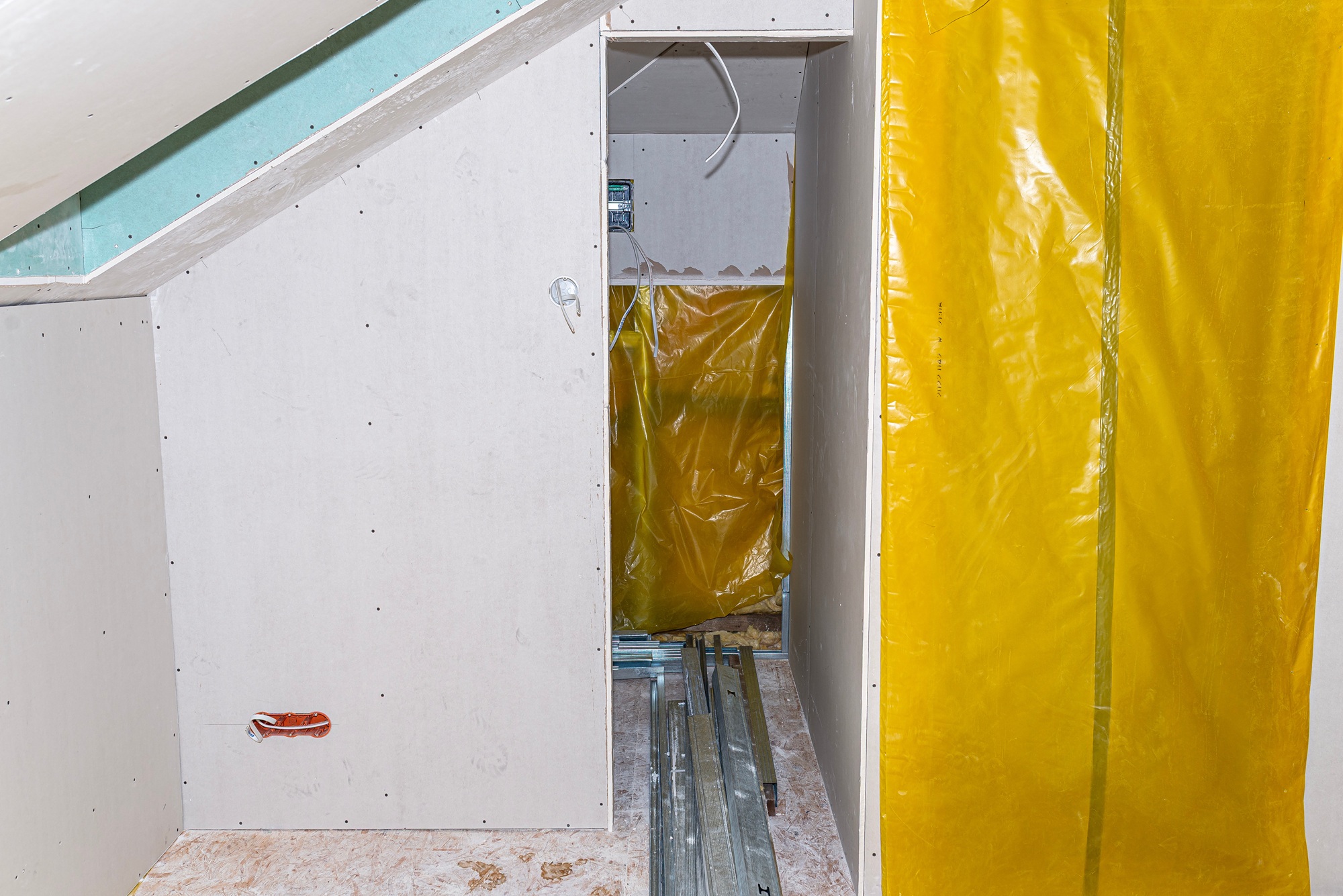
Why Hidden Ground Moisture Can Threaten Your Home Long Before You Notice It
Many homeowners assume crawl spaces only become a concern after standing water or visible mold appears. In reality, moisture often begins affecting a home’s structure long before obvious warning signs develop. That’s why vapor barrier installation in Portland OR starts with understanding how subgrade moisture behaves beneath the home, rather than simply covering the soil with plastic sheeting.
Northwest Weatherization applies building science and detailed moisture assessments to identify hidden risks that can reduce energy efficiency, encourage mold growth, and shorten the lifespan of structural components.
Subgrade moisture equilibrium assessments evaluate how water vapor, soil conditions, drainage, humidity, and crawl space design interact before vapor barrier installation. These assessments help professionals select appropriate materials and installation methods to prevent moisture intrusion, improve indoor air quality, preserve structural integrity, and ensure long-term crawl space performance.
Why Moisture Below Your Home Rarely Stays Below Your Home
Many homeowners ask: Can Ground Moisture Damage a Home Even Without Flooding?
The answer is yes.
Even when there’s no visible water beneath a house, water vapor constantly moves upward from the soil. Soil moisture content, outdoor humidity, seasonal temperatures, groundwater seepage, and ventilation conditions influence this natural process.
Professionals refer to this balance as subgrade moisture equilibrium. It describes the relationship between ground moisture and moisture entering the crawl space. When this balance is disrupted, excess vapor enters the structure, increasing the likelihood of moisture infiltration, mold growth, wood rot, and structural deterioration.
Homes throughout Portland, OR, and the surrounding Portland metro area experience these conditions because prolonged rainfall keeps the soil moist for much of the year. Without proper moisture control, even a well-built home can experience gradual damage hidden beneath the flooring.
Northwest Weatherization evaluates each property individually rather than assuming every crawl space behaves the same way.
Small Moisture Problems Often Grow Into Expensive Structural Repairs
Most crawl space issues don’t begin with catastrophic flooding. Instead, they develop slowly over months or years.
Some of the most common issues include:
1. Ground Moisture Slowly Evaporating Into the Crawl Space
Soil naturally releases water vapor throughout the year. Without crawl space vapor barriers or a reinforced membrane, moisture continuously enters the crawl space, raising humidity levels.
2. Poor Drainage Around Foundation Walls
Improper grading, blocked drainage system components, or a damaged perimeter drain can increase groundwater seepage beneath the home. Over time, excessive moisture contributes to water intrusion and weakens foundation walls.
3. Gaps Between Plastic Sheeting
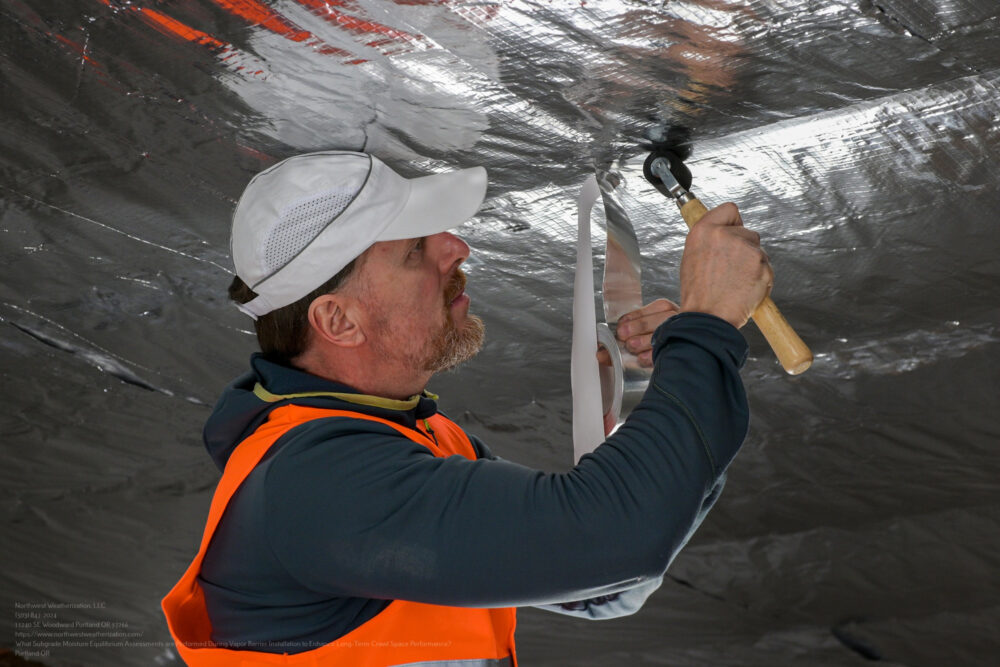
Installing black plastic without properly sealing overlaps creates pathways for moisture migration. Professionals use reinforced poly, seam tape, and carefully sealed joints to create a continuous moisture barrier.
4. Ignoring Existing Water Problems
A vapor barrier should never cover standing water. Before installation, professionals inspect for sump pump failures, foundation waterproofing issues, moisture damage, or conditions requiring Sump Pump Installation or Foundation repair.
5. Skipping Air Sealing
Moisture doesn’t travel only through the soil. Air movement also transports humidity into crawl spaces. Combining Air Sealing with vapor barrier installation significantly improves moisture control and energy efficiency.
Northwest Weatherization addresses these concerns before installation begins, helping homeowners avoid future crawl space repair services caused by preventable moisture problems.
For additional guidance, the U.S. Environmental Protection Agency‘s recommendations on controlling moisture to prevent mold explain why reducing excess moisture is one of the most effective ways to protect residential buildings.
Ready to Protect Your Crawl Space With Professional Vapor Barrier Installation?
Contact Northwest Weatherization today for trusted moisture-control solutions and friendly, expert service.
Why Proper Moisture Assessments Protect More Than the Crawl Space
A well-planned vapor barrier project benefits the entire home—not just the area beneath the floor.
Controlling moisture helps preserve:
- Indoor air quality.
- Structural integrity.
- Foundation stability.
- Crawl space insulation performance.
- Energy efficiency.
- Lower energy costs.
- Reduced heat loss.
- Healthier living conditions.
According to building science research, damp insulation loses effectiveness, forcing HVAC systems to work harder while increasing utility expenses. Moisture also encourages fungus growth, dry rot, musty odors, and long-term structural damage that may remain hidden for years.
By evaluating moisture equilibrium before installation, Northwest Weatherization helps homeowners protect their investment while improving the overall performance of their home’s structure.
Why Building Science Always Outperforms Guesswork
Every successful vapor barrier project begins with understanding how a building functions as a whole. Moisture doesn’t move randomly. It follows predictable pathways influenced by soil conditions, temperature, humidity, air pressure, and construction materials. That’s why Northwest Weatherization approaches every project through the lens of building science instead of relying on generic installation methods.
When professionals inspect a crawl space, they don’t evaluate only the exposed soil. They also assess foundation walls, the condition of existing crawl space insulation, the effectiveness of the drainage system, signs of water intrusion, moisture migration patterns, and compliance with current building code requirements. Together, these observations determine the most effective installation strategy.
Professional best practices often include:
- Correcting standing water or groundwater seepage before installing the vapor barrier.
- Selecting the proper Class I vapor retarder or reinforced membrane based on moisture conditions.
- Using reinforced poly, polyethylene sheet, seam tape, and durable installation methods to create continuous protection.
- Combining Air Sealing with vapor control to reduce moisture movement through air leakage.
- Evaluating whether crawl space encapsulation, foundation waterproofing, or Crawl Space Repair Services should accompany the project.
When these measures work together, homeowners experience improved energy efficiency, healthier indoor air quality, fewer musty odors, and greater long-term protection for the home’s structure.
Real-World Lessons from Moisture Assessments
One Portland metro homeowner noticed a persistent musty smell but found no visible plumbing leaks or standing water. During the inspection, technicians discovered elevated moisture content beneath the crawl space, caused by slow evaporation of ground moisture and minor groundwater seepage near one foundation wall.
Rather than immediately installing plastic sheeting, Northwest Weatherization first recommended improving the perimeter drain, correcting drainage concerns, and addressing localized water intrusion. After the crawl space had stabilized, a reinforced membrane was installed using carefully sealed seams around every penetration.
The result was a noticeably drier crawl space, improved indoor air quality, lower humidity, and better insulation performance throughout the home. More importantly, the homeowner avoided future structural deterioration, wood rot, and mold growth that likely would have continued unnoticed.
This type of evaluation illustrates why professional moisture assessments always come before installation.
Key Takeaways Every Homeowner Should Remember
Subgrade moisture may be hidden, but its effects rarely remain invisible forever. Without proper moisture management, water vapor can gradually weaken framing, damage insulation, encourage mold growth, and increase heating costs.
The most important lessons include:
- Moisture often enters crawl spaces as vapor rather than liquid water.
- Proper assessments identify moisture intrusion before damage becomes severe.
- Crawl space vapor barriers perform best when paired with drainage improvements and air sealing.
- Reinforced membrane systems provide better long-term durability than loosely installed plastic sheeting.
- Healthy crawl spaces contribute to healthier indoor air quality, stronger structural integrity, and improved energy efficiency.
Every successful installation begins with understanding how the soil, foundation, insulation, and ventilation work together, rather than treating each component separately.
Why Northwest Weatherization is the Smart Choice for Lasting Protection
We at Northwest Weatherization believe that every home deserves a customized moisture-control solution based on proven building science rather than guesswork. Our experienced team carefully evaluates moisture equilibrium, crawl space conditions, foundation performance, and ventilation before recommending the most effective approach for each property.
We proudly provide vapor barrier installation, attic insulation, crawl space cleaning, insulation removal, wall insulation, and weatherization service that help homeowners improve comfort, energy efficiency, and long-term durability. Our commitment is to deliver reliable workmanship that protects your investment for years to come.
If you’re concerned about moisture intrusion, poor indoor air quality, or crawl space conditions, we’re here to help. Contact Northwest Weatherization today for professional moisture protection solutions and expert service. Protect your home’s future with vapor barrier installation in Portland OR.
Ready to Protect Your Crawl Space With Professional Vapor Barrier Installation?
Contact Northwest Weatherization today for trusted moisture-control solutions and friendly, expert service.